
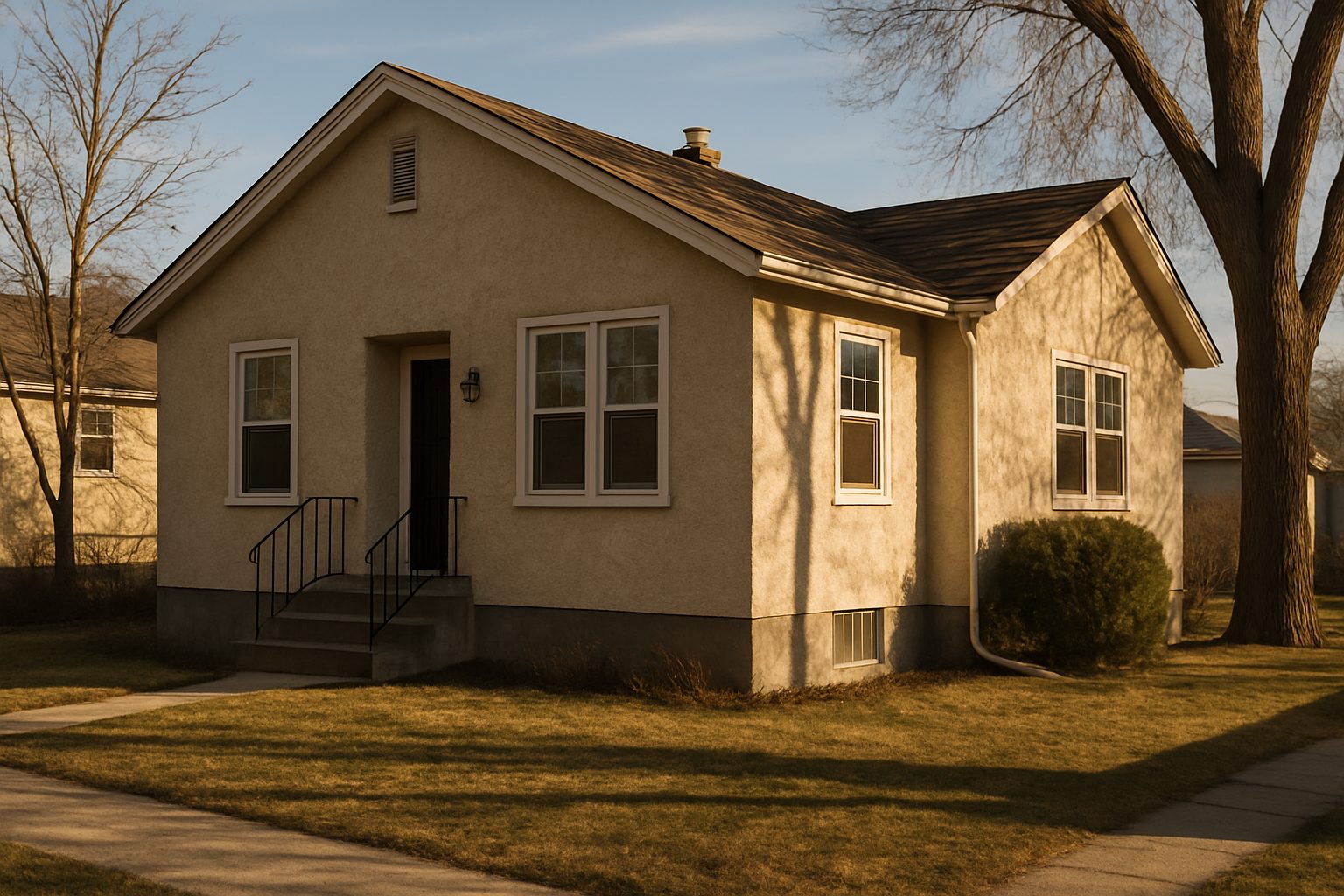
Cement Stucco in Winnipeg
The traditional three-coat mineral finish that most older Winnipeg homes wear, and still the right choice on many walls.
Most stucco in Winnipeg is cementitious, and most of it has been on the wall a long time. Winnipeg Stucco Works installs and repairs traditional cement stucco across the city.
Why This Material Persists
Cement stucco is a mineral finish. It is essentially sand, portland cement, lime and water, applied in coats over lath and cured hard. That composition gives it three properties that matter here.
It is durable in a way few claddings match. Walls installed in the 1940s and 1950s across Winnipeg are still serviceable, which is the reason so much of our work is repair rather than replacement.
It breathes. Water vapour moves through it, so a wall assembly can dry outward. In a climate with a hard freeze-thaw swing, that matters more than it does in a mild one.
And it is repairable with compatible material decades on. That is genuinely unusual. A damaged section can be cut out and rebuilt with the same material and finish, and done well it disappears.
Where It Is Rigid
The tradeoff is that it cures hard and does not flex. When a wall moves, and Winnipeg walls move on this clay, a rigid finish releases that stress by cracking.
Good practice manages this rather than pretending otherwise. Control joints give long elevations a planned place to move. Proper curing builds full strength instead of leaving the coat brittle. Correct mix proportions matter more than most people expect, since an over-rich mix shrinks and crazes as it cures.
Where a wall has a real history of movement, acrylic stucco is worth considering for its flexibility, weighed against its lower breathability.
Finishes
Sand float is the most common on Winnipeg houses, a fine even texture worked with a float. Dash is heavier and sprayed, and it hides substrate irregularity better than anything else. Knockdown gives a flattened, mottled texture.
On new work the finish is your choice. On a repair it is not, because the objective is matching what surrounds it. Reading an existing texture accurately and reproducing it by hand is most of the craft in stucco repair.
Serving Elmwood, Transcona and communities across Winnipeg.
What's Included
- Traditional portland-cement three-coat system
- Highly breathable, so walls can dry outward
- Repairable in place decades later
- Sand float, dash and knockdown finishes
- Free written quote before work starts
Other Services We Offer in Winnipeg
Cement Stucco Questions
Why is traditional stucco still used?
Because it is hard, it breathes, and it can be repaired in place fifty years later with compatible material. Very few cladding systems can be patched decades after installation and still match. On an older house that already wears it, matching cementitious stucco is usually the right answer.
Does cement stucco crack more than acrylic?
It is more prone to fine crazing, yes, because it cures rigid. Well-mixed, properly cured stucco with control joints where the wall needs them cracks far less than the reputation suggests. Most badly cracked walls were rushed or under-detailed, not badly chosen.
What finishes are available?
Sand float is the common smooth-textured finish. Dash gives a heavier sprayed texture that hides irregularity well. Knockdown sits between the two. On a repair, the finish is dictated by what is already on the wall, since matching texture is what makes a patch invisible.
Can cement stucco be painted later?
Yes, with a breathable masonry coating. The important thing is not to seal it under a non-breathable film, since the material relies on being able to move moisture through itself.
Get a Free Cement Stucco Quote
Tell us what the wall is doing and we will give you a written scope and price before any work starts.